This one can sound a little wrong at first. Whenever people talk about AI tools online, Claude often gets treated like the polished smart kid who writes cleaner and thinks deeper. I bought into that for a while too. It has that slightly smug “I use the serious model” aura around it.
But if I strip away the vibe and look at actual work, search, and day-to-day usefulness, I still land in the same place:
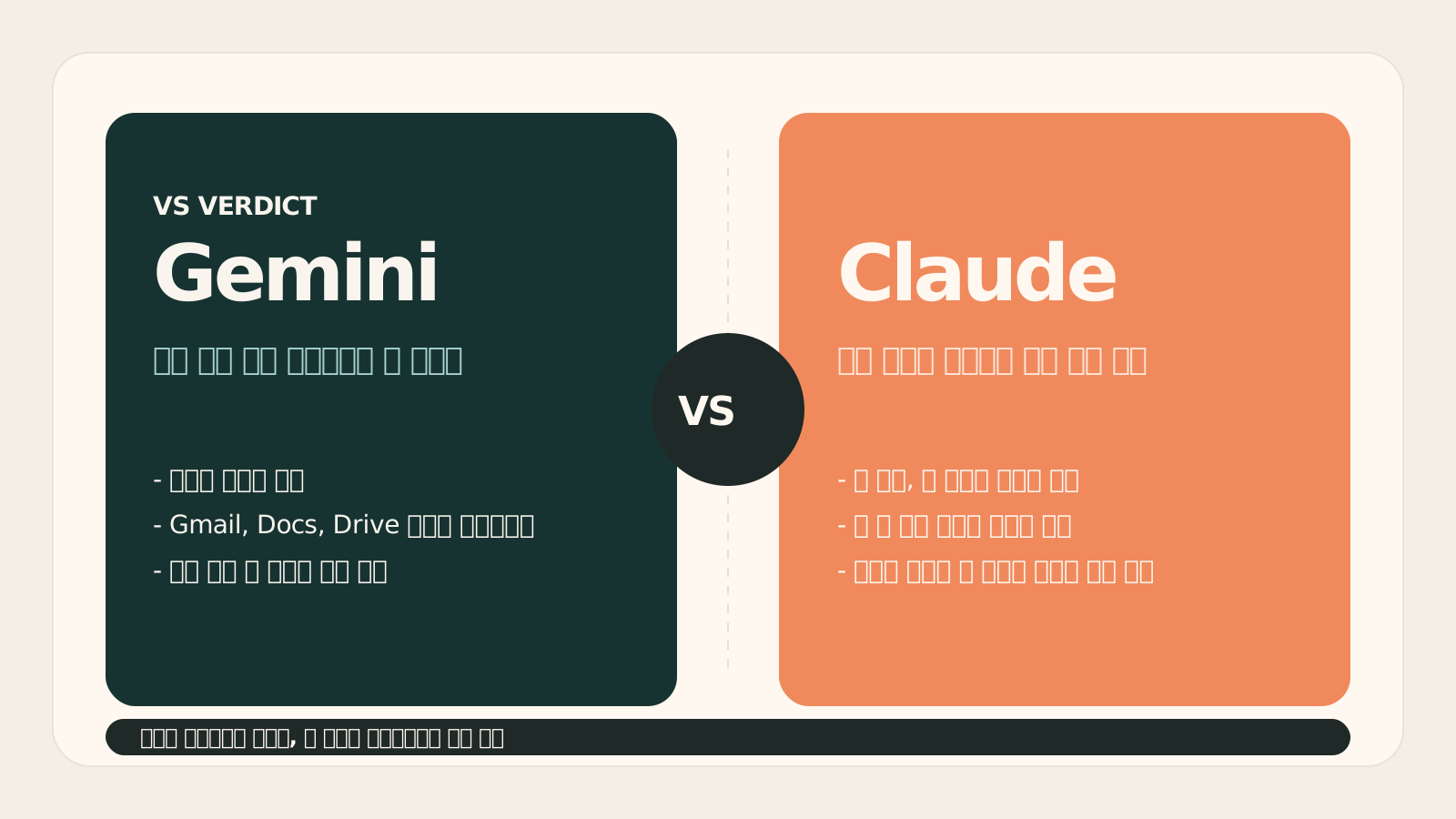
most people should try Gemini before Claude.
That does not mean Claude is weak. It means the first-choice question is different from the “which model can produce the prettiest long-form output?” question.
The one-line conclusion first
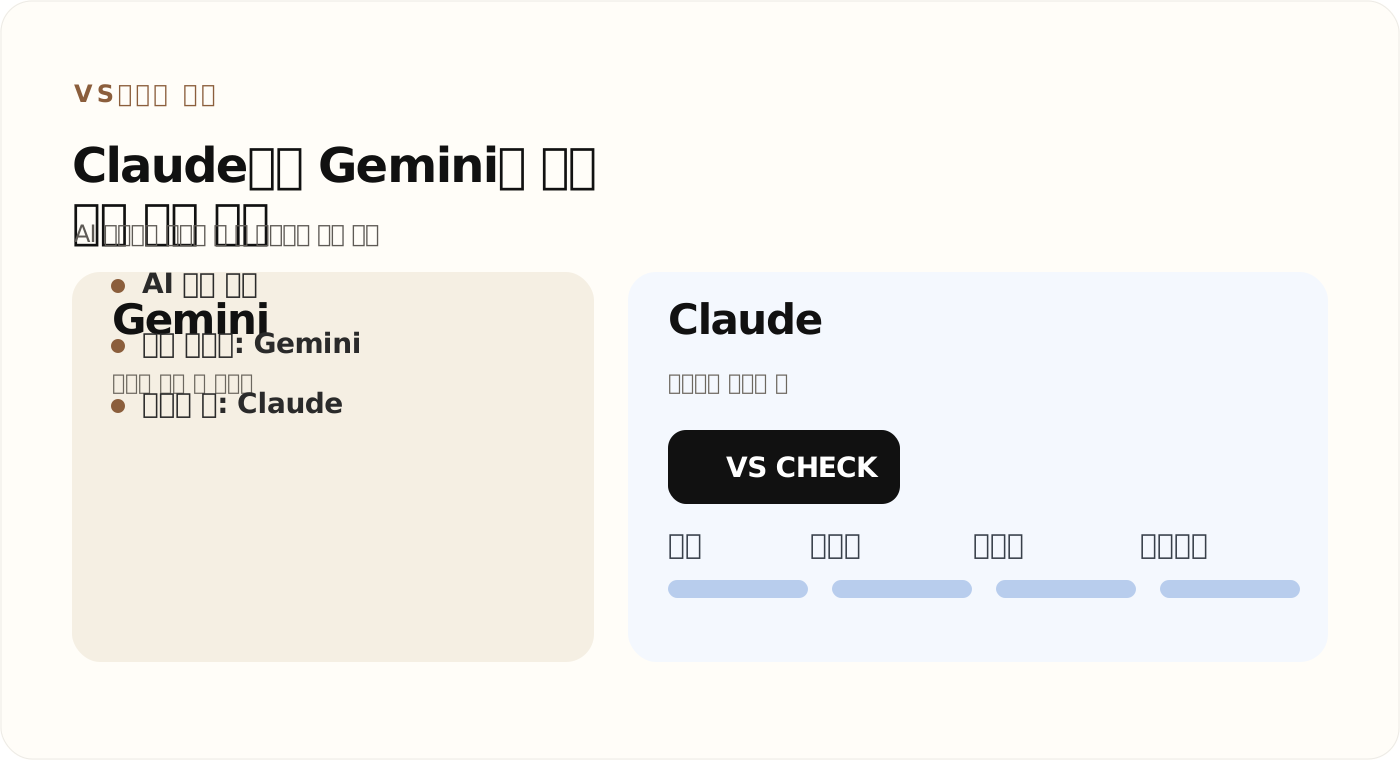
If long, carefully polished writing is not the single most important thing to you, Gemini is usually the better starting point.
That is really the whole argument.
- On raw capability, both are strong.
- On writing style, Claude can look more elegant.
- On how often you actually open it in the middle of normal work, Gemini wins for a lot more people than the discourse admits.
That last point matters more than people think.
Why Claude keeps looking better than it sometimes is
There is a reason Claude keeps getting framed as the “better taste” option.
1. The output feels tidy
Claude often sounds composed. Paragraph flow is clean, transitions are smooth, and long answers feel more intentionally written.
So the first impression is easy:
“Okay, this one sounds more human.”
That impression is real.
2. It handles long-context work well
If you are feeding in long documents, stacking conditions, or working through dense multi-step tasks, Claude absolutely has appeal. That reputation did not appear out of nowhere.
3. It makes the user feel sharper
This is the funny part, but it is also true. Using Claude can make the user feel a little more refined, a little more “in the know.” I am not pretending I am above that. People who spend enough time around tech communities are not immune to tool vanity.
But work usually punishes vanity and rewards lower friction.
The freshness problem changes the answer
Most people do not use AI for one huge philosophical task. They use it for:
- quickly checking what is true right now
- summarizing something messy
- comparing tools or options
- drafting a starting point
- getting context before a meeting
That type of work rewards a model that is easy to attach to current information and normal workflow.
This is where Gemini starts scoring.
Google pushed Gemini 3.1 Pro as a stronger model in early 2026, but in practice the part that matters most for ordinary users is not just horsepower. It is the way Gemini keeps feeling naturally tied to search, current information, and the broader Google environment.
That matters because so many work questions look like this:
- “Is this still accurate right now?”
- “Did this pricing page change?”
- “Is this feature still supported?”
- “Can you summarize this and keep the recent context attached?”
Gemini tends to feel more natural in that kind of task.
Fancy answers are not the same as useful answers
This is the core distinction.
Claude’s biggest strength is that it can stay composed through long, demanding tasks. No point denying that.
But the average workday is full of smaller loops:
- summarize this email
- compare these two docs
- give me a first draft
- pull out the key points
- help me decide fast
Those jobs do not always reward the most beautiful answer. They reward the least annoying path to a useful answer.
Gemini performs really well there.
Workflow fit beats pure model prestige
If someone already lives inside Gmail, Docs, Drive, Calendar, and Google search habits, Gemini enters the workflow more easily.
That sounds almost too practical to be interesting, but that is exactly why it matters. AI tools are not judged only by one impressive session. They are judged by whether people keep opening them.
And that usually depends on:
- lower friction
- easier context switching
- smoother connection to existing tools
- faster movement from question to action
In that kind of environment, Gemini becomes the model that gets used more often.
And the model that gets used more often is often the one people end up valuing more.
Claude is still the better pick for some people
This is not an anti-Claude post. It is a first-choice post.
Claude can still be the better fit if you are:
- writing long documents regularly
- highly sensitive to tone and prose quality
- doing deeper structured reasoning in extended sessions
- caring more about the finish of the output than the speed of workflow attachment
Those are real strengths, and they matter.
So who should start with Gemini?
The answer is: a very large percentage of normal users.
Especially people whose AI usage revolves around:
- checking current information
- summarizing work materials
- moving between documents and search
- drafting quickly
- getting to a decision faster
Those users do not always need the most elegant model. They need the model that slips into everyday work more naturally.
That is why I keep ending up here.
Final take
This is not about which model sounds more intelligent in a vacuum. It is about which one helps more often.
On that question, I still think most people should start with Gemini before Claude.
Claude may look more sophisticated. It may even be the better fit for some heavier writing workflows.
But for normal work, current info, search-heavy use, and everyday convenience, Gemini is more useful to more people than the online consensus likes to admit.
So that is my call:
Claude can look cooler, but Gemini is the smarter first move.