If you only look at internet mood, this matchup sounds finished before it starts. People talk like the iPhone 17 is the automatic answer. “It is the iPhone, what else is there to say?” That is the energy.
I get why. Even in Pangyo offices, iPhones are everywhere.
But once I stop looking at vibe and start thinking about what it is actually like to pay for a phone and live with it every day, I land somewhere else:
this time I think the Galaxy S26 is the better pick.
Yes, saying that out loud immediately sounds like forced contrarianism. I know. But I do think the reasons are more solid than they first appear.
Why I think the Galaxy S26 has the stronger case
The argument comes down to three things:
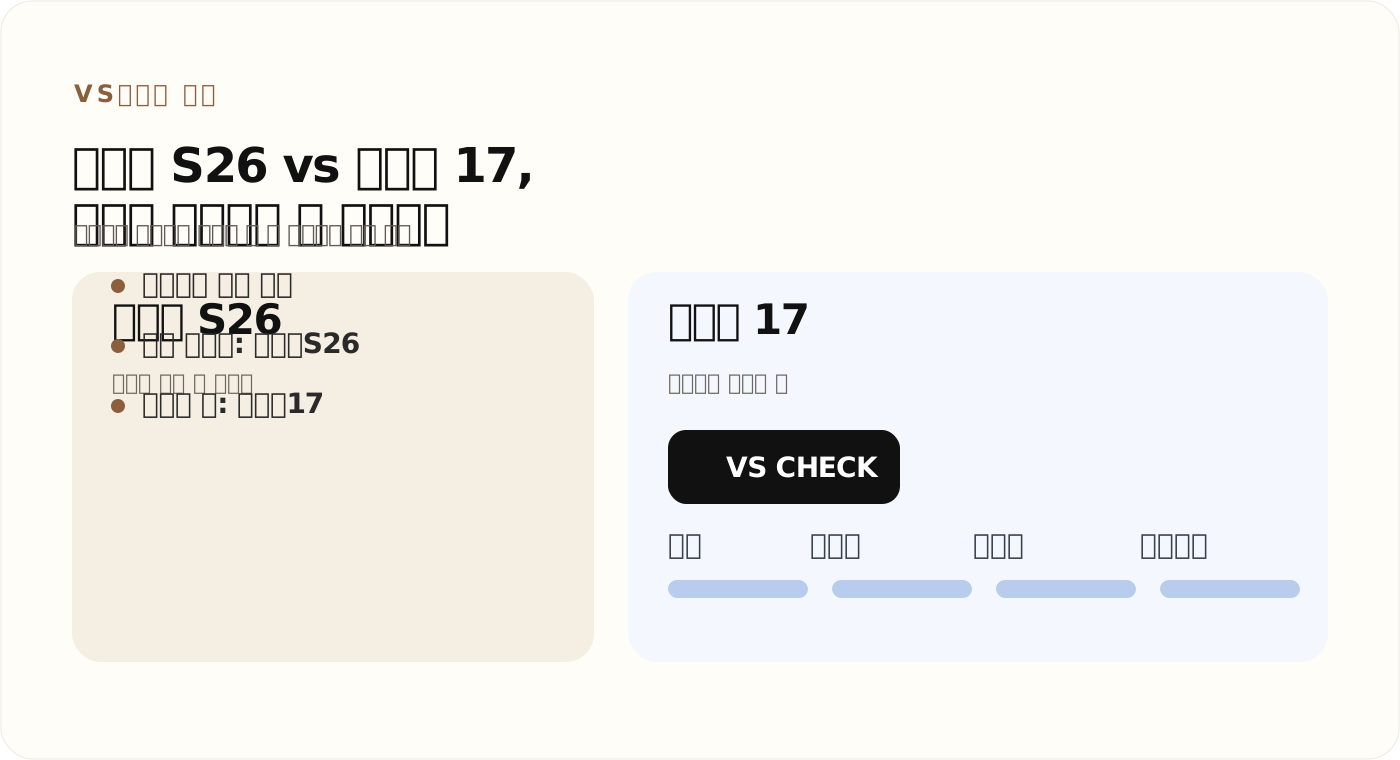
- It fits Korean real-world use better.
- Its AI and productivity direction feels more immediately useful.
- The iPhone 17 advantages are no longer as exclusive as they used to be.
Samsung positioned the S26 line in 2026 as an AI phone that removes steps from everyday tasks. That sounds like marketing language until you remember how often modern phone use is really about finding, summarizing, sharing, translating, and jumping between apps.
Apple, meanwhile, made the iPhone 17 better in the way Apple usually does: stronger fundamentals, better polish, a premium feel, more confidence in the basics.
That is good.
But the phone decision in 2026 is no longer just about which device has the safer prestige. It is increasingly about which one reduces friction in ordinary life.
The iPhone 17 is still good. That should be obvious.
This is not a “the iPhone is suddenly bad” argument.
The iPhone 17 still offers the things people expect:
- a polished high-refresh display
- strong chip performance
- dependable camera output
- clean ecosystem behavior
- familiar premium feel
That package is still strong.
The problem is that “strong package” is not the same thing as “best everyday fit.”
Point 1: Galaxy still makes more sense for Korean use patterns
This gets downplayed too often.
In Korea, people do not use their phones in some abstract universal way. They rely on specific local app habits and local expectations:
- KakaoTalk
- Naver
- Coupang
- Samsung Wallet or payment flows
- translation and capture-heavy office habits
- local service ecosystems
In that environment, Galaxy often feels less like a “feature-heavy phone” and more like a phone that is simply aligned to how people here already move through the day.
That matters.
The advantage is not just that Galaxy has more toggles. It is that the everyday pattern often feels more native.
Point 2: Galaxy’s AI push feels more visibly practical
Samsung pushed harder on the “do this for me” side of phone AI.
Apple still tends to favor cleaner, more controlled experience design. Samsung is more willing to make the phone feel like it is actively helping reduce steps.
That difference becomes meaningful if your real phone use includes:
- summarizing long chunks of text
- cleaning up notes after meetings
- pulling information out of images
- reducing app-hopping while searching and sharing
That is not a tiny niche anymore. For a lot of office workers, that is just normal phone behavior.
And in that context, Galaxy’s direction feels more useful than Apple’s elegance-first approach.
Point 3: Apple’s classic advantages are no longer automatic wins
For a long time, people repeated some version of the same formula:
- best camera? iPhone
- best performance? iPhone
- safest long-term pick? iPhone
That formula used to be easier to defend.
Now it is more complicated.
Galaxy cameras are already good enough for most people. Performance is already beyond what normal daily use needs. Screens, battery experience, convenience features, and AI-assisted workflow all matter more than they used to.
So the iPhone is no longer winning the whole decision just by winning the old reputation game.
Especially not in Korea.
Who is more likely to prefer the Galaxy S26?
I think the Galaxy S26 makes more sense for people who:
- lean heavily on Korean apps and local services
- care about AI convenience in actual use
- value utility over brand aura
- treat the phone as a daily work-and-life tool first
For those people, Galaxy satisfaction can easily end up higher than expected.
Who should still pick the iPhone 17?
There are still obvious cases where iPhone remains the right answer:
- people already deep in the Apple ecosystem
- people who care a lot about Apple’s consistency in camera output
- people who prefer a more controlled, minimal UX
- people who do not have a real reason to leave iPhone in the first place
If that is you, there is no need to force a switch.
Final take
So yes, my conclusion is simple:
the Galaxy S26 makes more sense than the iPhone 17 for more people than the current internet mood suggests.
That does not mean everyone should suddenly abandon iPhone. It means the lazy default answer is weaker now.
If you care about practical use, local fit, AI convenience, and reducing little daily annoyances, Galaxy has a stronger case this time than people are comfortable admitting.
That is why I am calling it this way.
Not by style. Not by logo prestige. By actual use.
This time, the smarter practical choice is Galaxy.